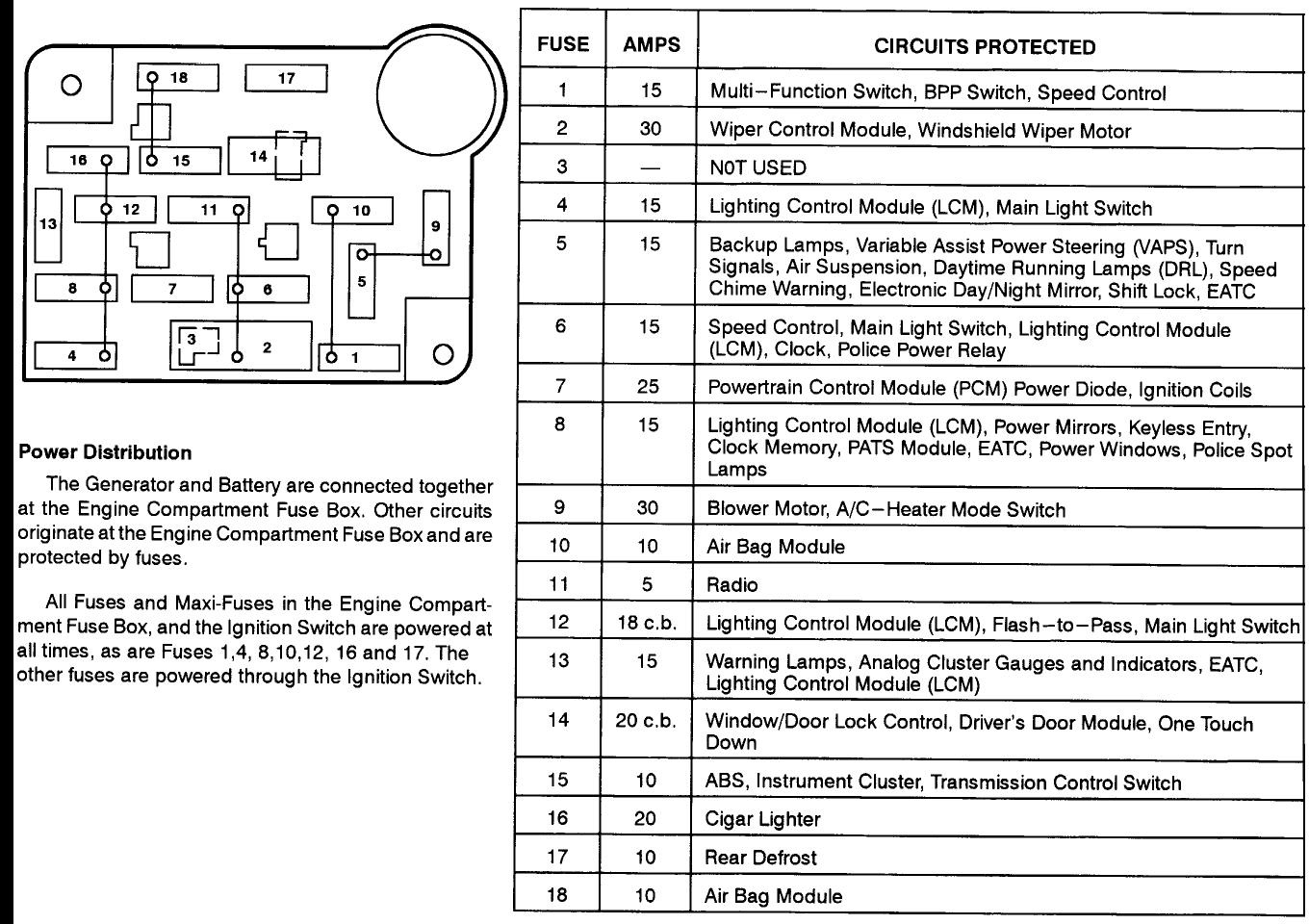
The Instrument panel fuse box is also called Under Dash Fuse box.Its Located under the dash panel. Below you will see the Fuse box Diagram ,in this Diagram the Fuses / Relay Location are Shown and mentioned for Following Car Parts:---- Stop Lamps,Hazard Lights,Speed Control,Windshield Wiper and Washer Control Fuse,Tail Lamp fuse,Parking Lamp Fuse,License Plate Lamp Fuse,Illumination Lamp Fuse, Turn Signal Lamp Fuse,Heater Rear window Relay Control, A/C clutch,Radio/clock control fuse,Luggage Compartment Fuse,Day/ night illumination control Relay,Fuel filter door release fuse,power mirror fuse,Courtesy lamps,Fog Lamps,Horn,Cigar lighter,PRNDL lamp,warning indicator,oil warning relay,heater blower motor fuse. See the Fuse Box Layout Diagram Showing Exact Location of Each and Every Fuse:----- See below List of more fuse box Diagrams:---- Fuse box Diagram for GMC Envoy V6 Body Control Module? http://carfusebox.blogspot.in/2012/02/fuse-box-diagram-for-gmc-envoy-v6-b...
Automotive Electronic Fuel Pump how do I do it right? The easiest way is to use an oil pressure switch. The switch will stop the pump whenever the oil pressure in the engine goes away. So, whenever the engine is off, the pump will turn off automatically. Some switches just do that. But how do I get the pump to run when I'm trying to start the motor and the oil pressure's not up yet? You use a three prong switch like this Standard Ignition PS-64: The switch will also let the pump run when you hit the starter because the engine doesn't have oil pressure yet. One wire goes to the pump, one to the start circuit, and the other to the ignition circuit. So, when there is no oil pressure, the switch connects START to PUMP, and as soon as you start cranking it runs the pump. When the oil pressure comes up, the switch connects IGN to PUMP, for normal running. When oil pressure goes away (because you just hit that rock and tore the pan off the engine, fo...
Car Circuit Wiring Diagram Theory Cars 12volt Wiring Diagram Basic Electrical Theory: For any 12 volt, negative ground, electrical system to operate, the electricity must travel in a complete circuit. This simply means that current (power) from the positive (+) terminal of the battery must eventually return to the negative (-) terminal of the battery. Along the way, this current will travel through wires, fuses, switches and components. If, for any reason, the flow of current through the circuit is interrupted, the component fed by that circuit will cease to function properly. Perhaps the easiest way to visualize a circuit is to think of connecting a light bulb (with two wires attached to it) to the battery-one wire attached to the negative (-) terminal of the battery and the other wire to the positive (+) terminal. With the two wires touching the battery terminals, the circuit would be complete and the light bulb would illuminate. Electricity would follow a path from ...


Comments
Post a Comment